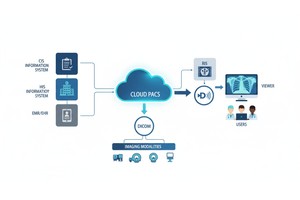
Cloud PACS (Picture Archiving and Communication System) has revolutionized medical imaging by replacing traditional, hardware-based systems with flexible, web-accessible solutions. For small hospitals and clinics, where budgets and IT resources are often limited, cloud PACS offers the ability to store, access, and share imaging data securely without investing heavily in physical servers or maintenance.
This blog explores the best cloud PACS options for small hospitals, focusing on scalability, affordability, integration, and security, along with how PostDICOM stands out as an excellent solution for healthcare providers seeking efficiency and cost-effectiveness.
Before choosing a vendor, small hospitals must assess their operational needs and limitations. Some essential factors to consider include:
1. Ease Of Use: A user-friendly interface ensures staff can quickly adapt without lengthy training.
2. Integration Capability: The system should easily integrate with your existing EMR, HIS, or RIS to maintain workflow consistency.
3. Data Security And Compliance: Ensure the PACS provider follows HIPAA, GDPR, and other regional data protection laws.
4. Cost-effectiveness: Evaluate pricing models based on storage, user count, and data transfer volumes.
5. Support And Maintenance: Round-the-clock technical support is crucial for minimizing downtime.
6. Performance And Speed: The system should deliver high-resolution images quickly, even on limited bandwidth.
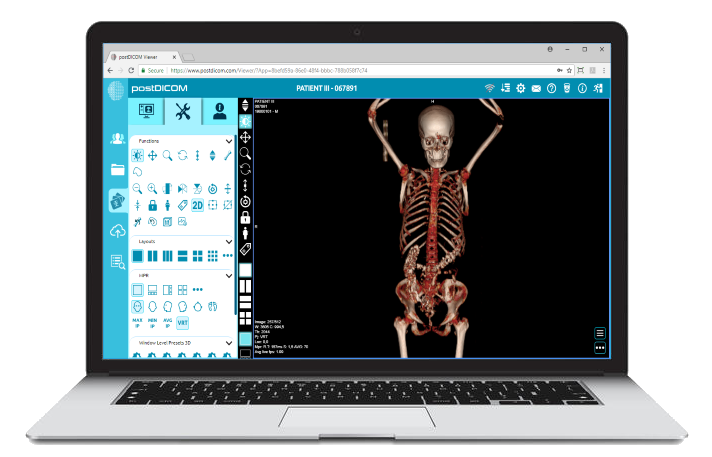
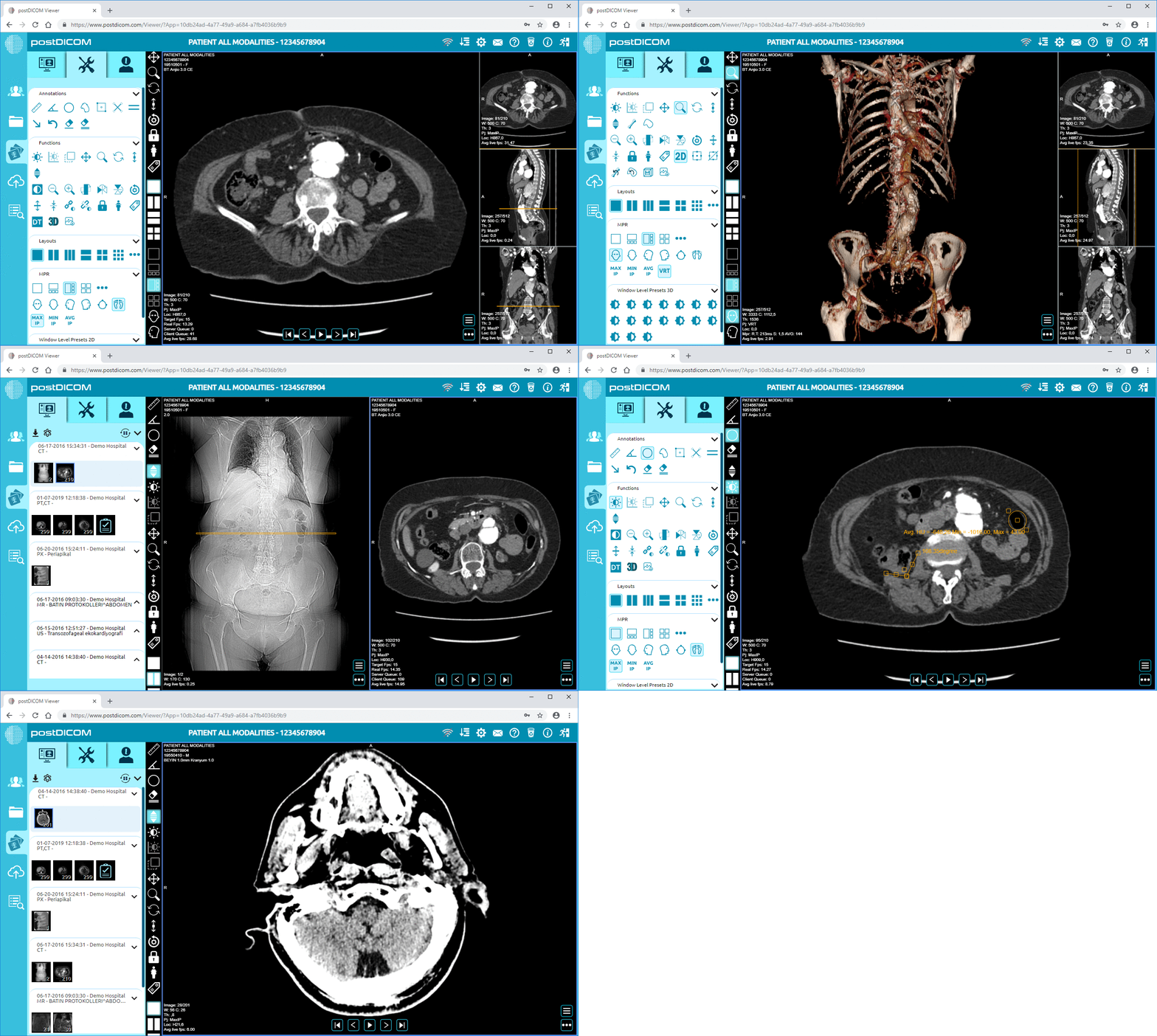
PostDICOM is a top-tier cloud PACS platform designed to meet the needs of hospitals and clinics of all sizes, with a particular focus on accessibility and affordability for small healthcare providers. It provides a complete DICOM viewer and image management system accessible directly from a web browser, with no software installation required.
Key Features:
• Web-based Access: Physicians can view images securely from any device, anywhere in the world.
• Zero-footprint Dicom Viewer: No need for additional software; everything runs within the browser.
• Multi-platform Compatibility: Works seamlessly on Windows, macOS, Linux, Android, and iOS.
• Ai-powered Tools: Advanced visualization and measurement tools help improve diagnostic accuracy.
• Data Sharing And Collaboration: Securely share cases with other physicians or specialists in real time.
• Robust Security: PostDICOM ensures HIPAA and GDPR compliance with encrypted data storage and transmission.
• Scalability: Storage expands easily as your imaging volume grows, eliminating capacity concerns.
PostDICOM offers flexible, subscription-based pricing with no hidden costs. Its cloud infrastructure removes the need for expensive servers or IT maintenance, making it a perfect fit for facilities with limited budgets. The platform also integrates with HIS and RIS systems, ensuring smooth workflow integration.
Ambra Health is a well-known cloud-based medical image management solution designed for hospitals, imaging centers, and research institutions. It emphasizes interoperability and ease of use, allowing clinicians to upload, view, and share images securely across systems.
Key Features:
• Cloud Storage With Role-based Access Control
• Integration With Ehr Systems Like Epic And Cerner
• Patient Image Upload Portals For Remote Diagnostics
• Multi-site Access And Scalable Architecture
While Ambra offers excellent scalability, its pricing may be higher for smaller hospitals compared to more flexible providers like PostDICOM.
RamSoft’s OmegaAI is an AI-driven cloud PACS that offers a full range of diagnostic imaging management tools. It’s built with automation and efficiency in mind, helping radiologists and clinicians streamline image processing.
Key Features:
• Ai Automation For Image Triage And Prioritization
• Cloud-native Architecture For Seamless Scalability
• Support For Advanced Modalities And Large Imaging Datasets
• Integration With Teleradiology Networks
RamSoft is an advanced option, but for small hospitals, it can be overkill in terms of cost and complexity. It’s best suited for mid-sized or multi-site healthcare organizations.
RadiAnt is popular among smaller facilities for its fast, lightweight DICOM viewer. With integration into cloud storage services, it allows clinicians to store and retrieve images from platforms like Google Cloud and AWS.
Key Features:
• Fast Image Rendering And Loading Times
• Easy-to-use Interface
• Optional Cloud Plug-ins For Storage And Sharing
• Suitable For Smaller Diagnostic Centers
However, RadiAnt’s cloud capabilities depend on external integrations rather than being a built-in solution, which may complicate deployment for hospitals seeking an all-in-one PACS platform.
Dicom Systems offers a powerful enterprise imaging solution that supports both on-premises and cloud deployments. Its “Unifier” platform excels in interoperability, connecting various imaging systems across facilities.
Key Features:
• Cloud Pacs With Ai And Analytics Support
• Dicom Routing And Image Normalization
• Advanced Security And Auditing Features
• Api-driven Integrations With Emrs And Other Systems
While robust, the Dicom Systems solution can be complex for smaller hospitals with limited IT teams. It’s ideal for organizations expecting to scale or manage multi-site networks in the future.
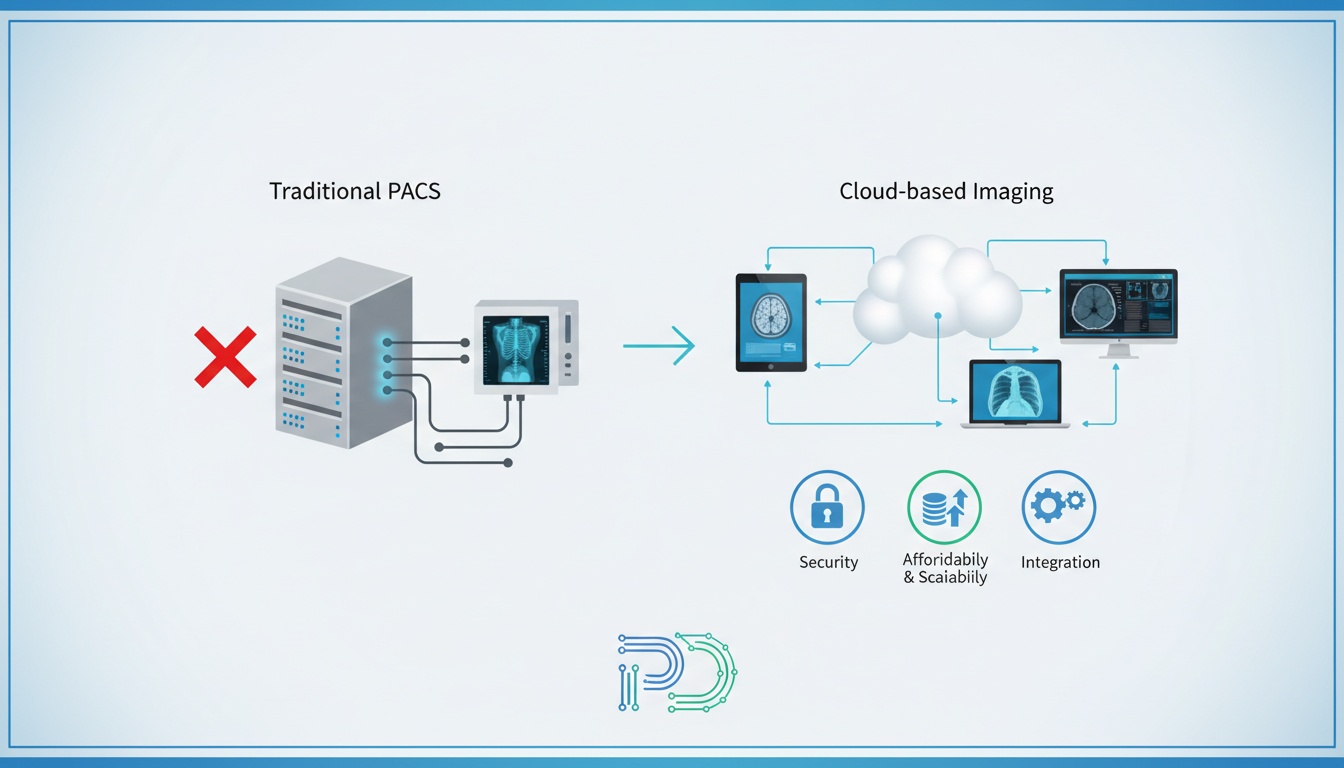
Small hospitals traditionally relied on on-site PACS servers, which required significant capital investment, technical expertise, and constant maintenance. Cloud PACS changes that equation entirely.
Traditional PACS systems can cost tens of thousands of dollars to install and maintain. Cloud PACS, by contrast, eliminates hardware costs and operates on a subscription model. With PostDICOM, for example, you only pay for the storage and features you need, scaling up as your imaging volume grows.
Cloud PACS allows healthcare professionals to access images anytime, anywhere—crucial for telemedicine and remote consultations. It enhances collaboration between radiologists, specialists, and referring physicians, speeding up diagnosis and treatment planning.
On-premises systems often require weeks of setup. Cloud PACS can be deployed within hours, with automatic updates ensuring the latest security and performance enhancements without downtime.
Cloud PACS providers like PostDICOM employ end-to-end encryption, secure data centers, and compliance with international healthcare data protection standards. This ensures patient information remains private while still being easily accessible to authorized personnel.
As imaging demand grows, hospitals can instantly expand cloud storage without new hardware. This scalability helps smaller hospitals remain agile while keeping up with digital imaging advancements.
 - Created by PostDICOM.jpg)
While several cloud PACS options exist, PostDICOM uniquely caters to small and mid-sized hospitals seeking enterprise-grade performance without the enterprise price tag. Its combination of affordability, intuitive interface, and advanced functionality makes it a standout choice.
Comprehensive Integration: PostDICOM supports integration with HIS, RIS, and EMR systems, enabling seamless data flow and improving overall efficiency.
User Experience: The platform’s intuitive web interface means even non-technical users can quickly upload, view, and manage images without training overhead.
Collaboration Tools: PostDICOM enables physicians to share images securely through encrypted links, fostering real-time collaboration across departments or with external specialists.
Support and Reliability: With 24/7 technical support and guaranteed uptime, small hospitals can trust that their PACS will remain operational and responsive.
Cost Efficiency: PostDICOM’s transparent, pay-as-you-go model ensures hospitals only pay for what they use, with no surprise fees.
As telemedicine, teleradiology, and AI-driven diagnostics continue to grow, cloud PACS adoption is expected to accelerate globally. The flexibility of cloud solutions aligns perfectly with the evolving needs of small hospitals, which must provide high-quality imaging services without inflating operational costs.
The future of cloud PACS will likely include more automation, predictive analytics, and deeper integration with clinical decision support tools. For small hospitals, this means easier workflows, faster turnaround times, and improved patient care outcomes.
By adopting a cloud PACS like PostDICOM, small hospitals can focus more on patient care and less on technical maintenance, while enjoying enterprise-level imaging functionality.
Start transforming your imaging workflow today. Sign up for PostDICOM’s free trial and experience firsthand how an advanced cloud PACS can streamline your operations, improve collaboration, and enhance patient care outcomes.
|
Cloud PACS and Online DICOM ViewerUpload DICOM images and clinical documents to PostDICOM servers. Store, view, collaborate, and share your medical imaging files. |